About the clinic
A multispecialty dental clinic in Koramangala 4th Block
Tooth District Multispecialty Dental Clinic and Implant Center is on Koramangala 1st Main Road in S.T Bed Layout. It is a general dental practice run by an endodontist, with an orthodontist, two periodontists and an oral and maxillofacial surgeon consulting at the same address, which mostly means the ordinary work is done carefully and the difficult work does not get referred out. Patients come from across Koramangala and Ejipura, and regularly from Indiranagar, Domlur and HAL.
One clinician who owns your case
Dr. Chaitanya diagnoses, plans and reviews every patient herself. Where a case needs an orthodontist, a periodontist or an oral surgeon, it is done in this clinic by one of four named specialists, not referred across town, and she stays the person who knows your file.
Five languages, one of them yours
English, Hindi, Kannada, Malayalam and Tamil, spoken by the dentist herself rather than relayed through the front desk. Consent that was given in a language someone only half follows is not really consent.
The figure before the treatment
You get the exact cost for your case after the examination, with the alternatives priced next to it, and it does not move afterwards. We do not publish numbers here because the honest one depends on the material and on your tooth.
Imaging before instruments
Digital X-ray on every root canal and every wisdom tooth, and magnification where it changes the outcome. You see the image; guessing is what causes problems.
Time spent on the numbing
An inflamed tooth is harder to anaesthetise than a healthy one, and a rushed injection is why dentistry has the reputation it has. Nothing starts until you say it is numb.
Treatment you do not need, refused
Sometimes a cleaning gets you what you wanted from whitening. Sometimes a wisdom tooth should be left alone. Several of our reviews mention exactly this, and it is deliberate.


More of the clinic, and the cases we are allowed to show, on Instagram: @toothdistrict.

Who will treat you
Dr. Chaitanya K, the endodontist who does the treatment herself
Dr. Chaitanya K is the lead dentist at Tooth District, Koramangala. She holds a BDS, in which she was the university gold medalist in Conservative Dentistry and Endodontics, and an MDS in that same speciality. Nine years of clinical experience, across root canals and the restorative work that rebuilds a tooth rather than replacing it.
At many clinics a root canal is delegated to whoever is free that day. Here it is done by a specialist whose entire postgraduate training was in saving teeth, under magnification, with rotary instruments, usually in a single sitting. The same speciality covers the work that rebuilds a tooth afterwards: inlays, onlays, veneers, bleaching, closing a gap, rebuilding a bite that has worn down.
She consults in English, Hindi, Kannada, Malayalam and Tamil, all five herself.
- Qualifications
- BDSMDS in Conservative Dentistry & Endodontics
- Focus
- Root canal treatmentSingle-visit endodonticsEndodontic retreatmentInlays and onlays
The specialists
Four specialists, and none of it referred out
Dr. Chaitanya K sees every patient first, takes the X-rays and makes the plan. Where a case needs a different speciality, it is done here, in the same chair, by the person trained for it. You are told who that is before anything starts.
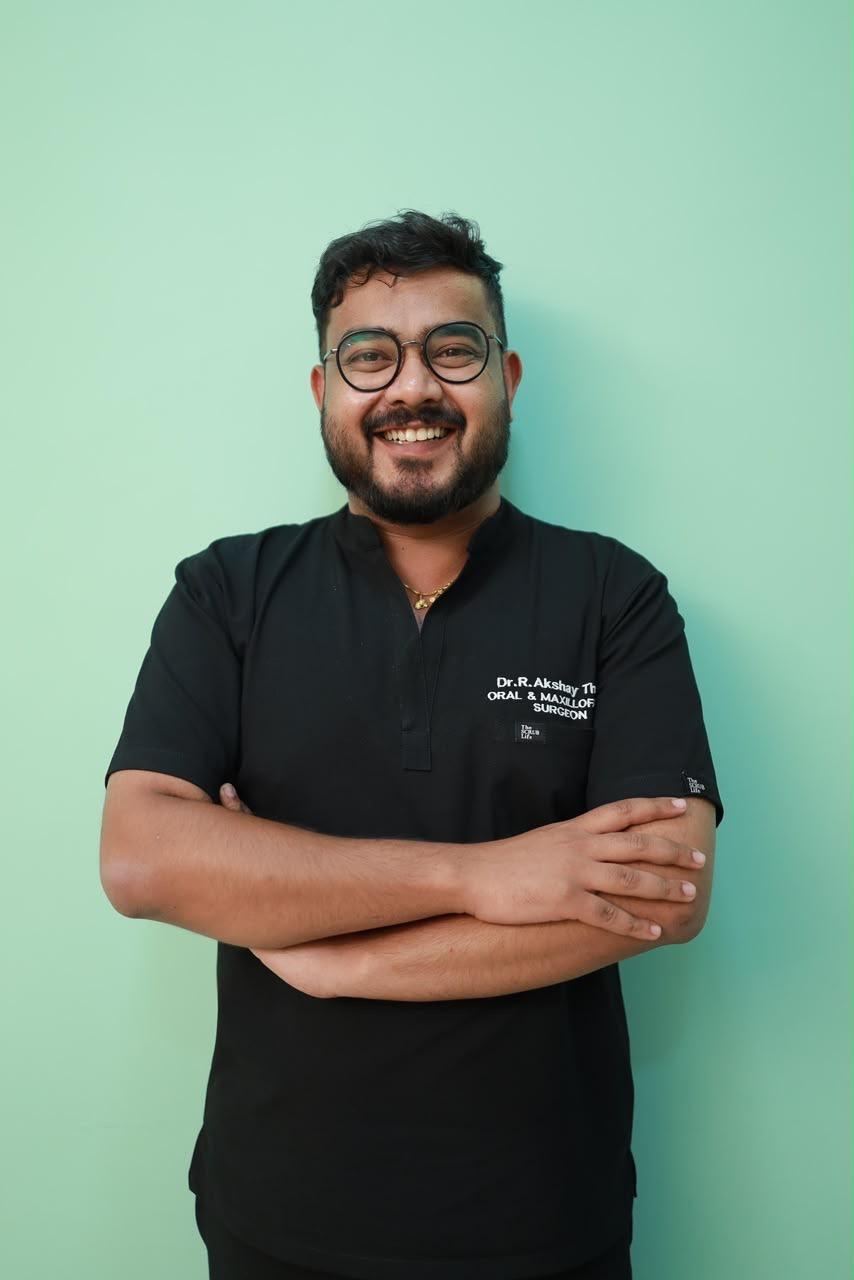
Dr. Akshay
Oral and Maxillofacial Surgeon
Surgical removal of impacted wisdom teeth, tongue tie release, and the other extractions that need an incision rather than forceps.
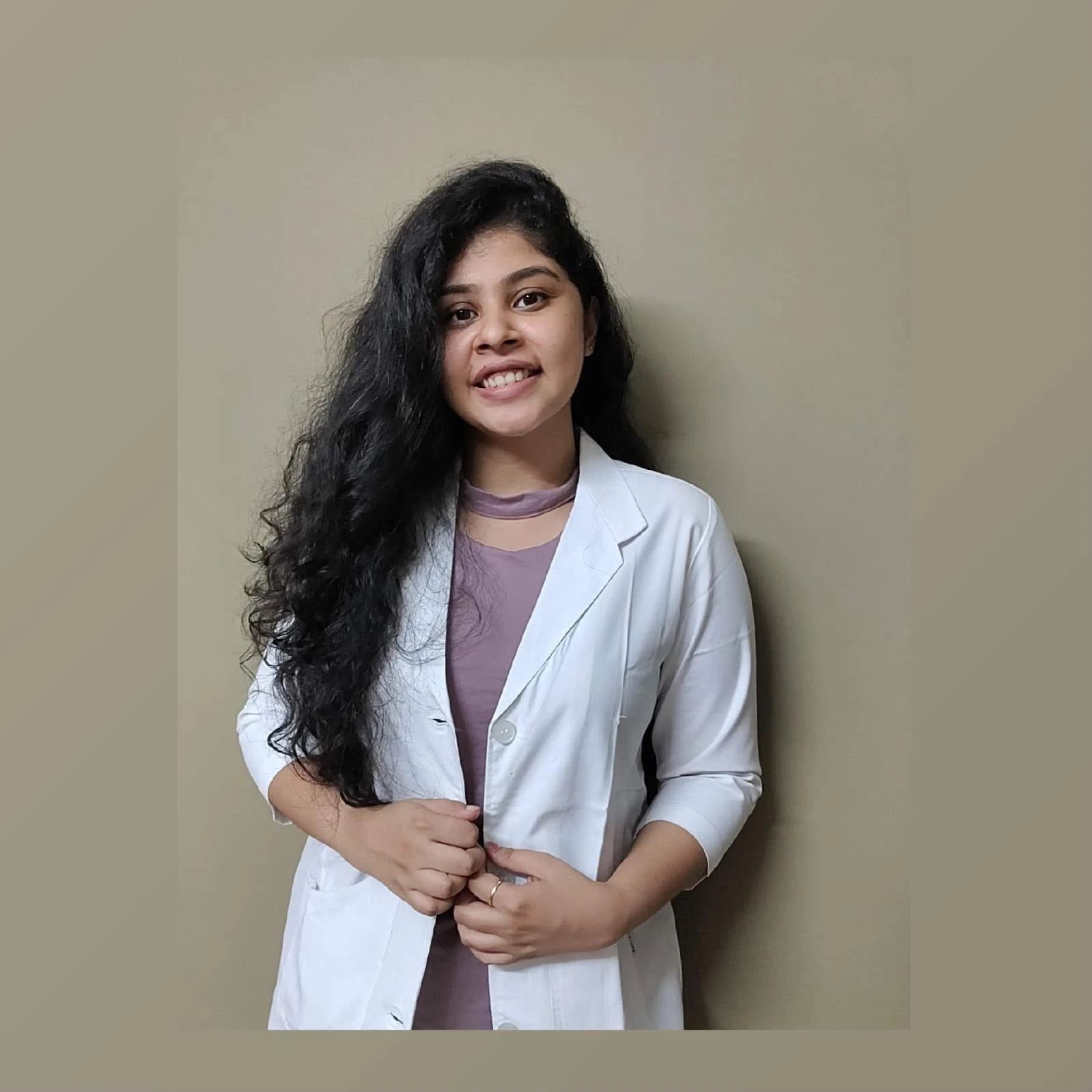
Dr. Meghna
Orthodontist
Braces and clear aligners, from the treatment plan through every adjustment to the retainer.
Dr. Vinay
Periodontist
Gum disease: deep cleaning below the gum line, and flap surgery for the pockets that do not respond to it.
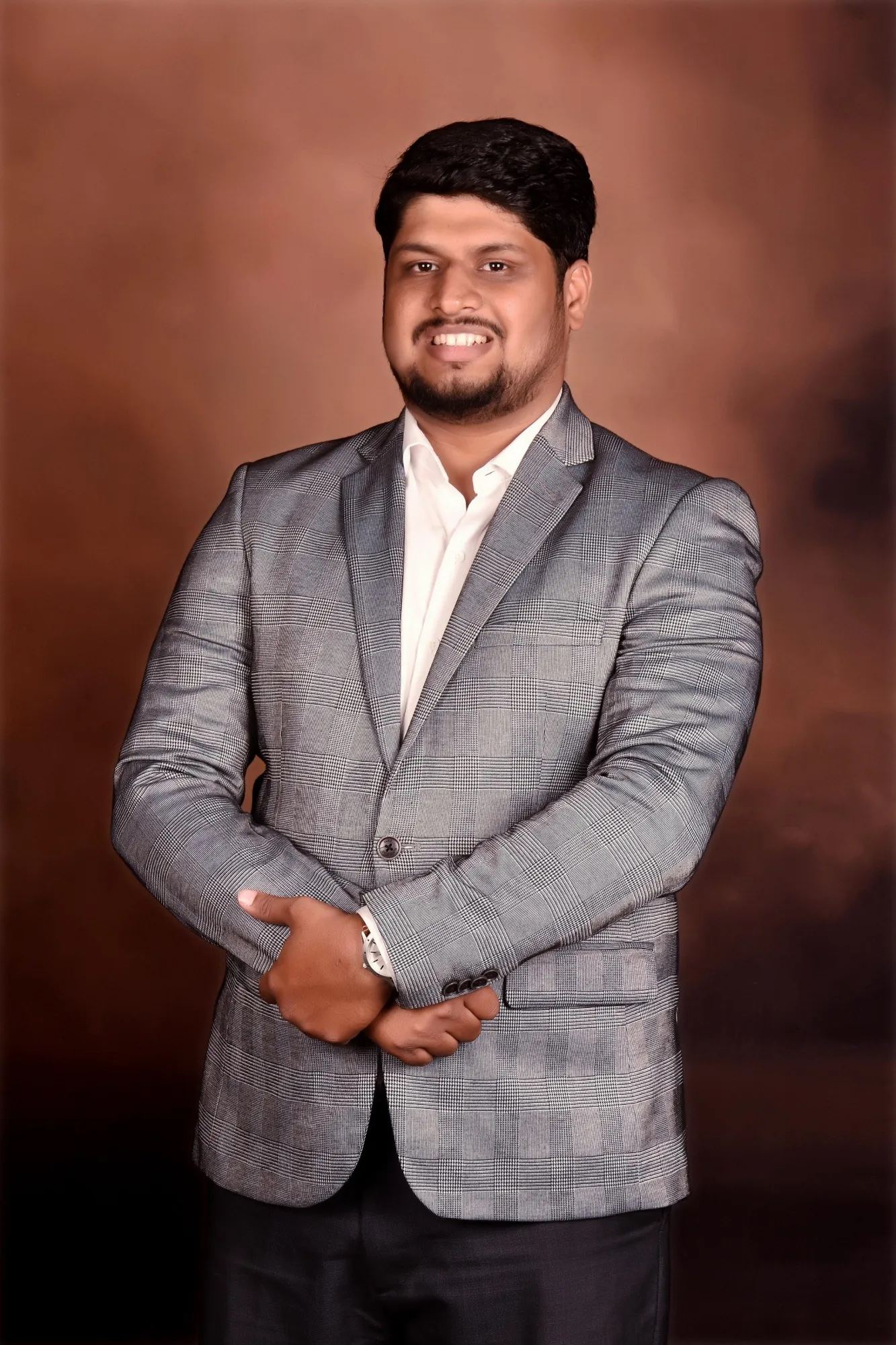
Dr. Ashwin
Periodontist
Gum disease: deep cleaning below the gum line, and flap surgery for the pockets that do not respond to it.
Equipment
State of the art equipment, and all of it in the room
State of the art is a phrase every clinic uses, so here is the list it should mean. Six machines that change what a treatment feels like and how long the result lasts, none of them in a brochure and all of them available for you to look at.
- Digital X-ray (RVG)
- Far less radiation than film, and the image is on screen in seconds.
- Rotary endodontics
- NiTi instruments. The reason most root canals here finish in one sitting.
- Dental operating microscope
- How the fourth canal in a molar gets found rather than missed.
- Intraoral camera
- So you see what we are describing, on your own tooth.
- Dental laser
- For soft tissue work, with less bleeding and a faster recovery than a blade.
- Autoclave sterilisation
- Every reusable instrument, every time.
Sterilisation
Strict sterilisation protocols, and how you can check
Every clinic says it is hygienic. Almost none of them tell you what that means in practice, which makes it impossible to tell the careful ones from the rest. So here is ours, at the level of detail you can verify from the chair.
- 1
Autoclaved, not wiped
Every reusable instrument goes through an autoclave, which is steam under pressure at 134°C. That is the only method that reliably kills bacterial spores, and chemical disinfection on its own does not.
- 2
Sealed until it reaches you
Sterilised instruments are sealed in pouches and the pouch is opened at your chair, not before. Each one carries an indicator strip that changes colour only if the cycle actually ran.
- 3
Single-use means single use
Needles, blades, suction tips, gloves, bibs and saliva ejectors are used once and disposed of. Nothing in that list is ever reprocessed, whatever it costs.
- 4
The chair between patients
The chair, the light handles, the bracket table and every switch touched during a procedure are disinfected before the next person sits down. This is the part that is quick to skip and easy to see.
- 5
The water lines too
The dental unit water lines are flushed and disinfected on a schedule. Nobody asks about this and it is one of the things that separates a clinic with a protocol from a clinic with a cupboard.
- 6
Ask, and you will be shown
The sterilisation area is not hidden behind a door. If you want to see how your instruments were processed before they reach you, say so at your appointment and someone will walk you through it.
What we treat
Everything a family needs, in one clinic
From a six-monthly cleaning to an implant. Each has its own page with what it involves, how many appointments it takes and how long you are in the chair.
Root Canal Treatment
A root canal saves a tooth whose nerve has been infected, instead of pulling it. Done under magnification with rotary instruments, most are finished in a single appointment.
Dental Implants
An implant replaces a missing tooth from the root up, a titanium post in the jawbone carrying a crown. It is the only replacement that does not rely on the teeth beside it.
Wisdom Tooth Removal
A wisdom tooth that keeps getting infected, pushes into the tooth in front, or cannot be cleaned properly needs to come out. We X-ray first and tell you exactly which kind of removal yours is.
Teeth Cleaning & Scaling
Scaling removes the hardened plaque that brushing cannot, from above and below the gumline. It is the cheapest appointment in dentistry and the one that prevents most of the expensive ones.
Gum Disease & Flap Surgery
Gums that bleed when you brush are the first stage of a disease that quietly removes the bone holding your teeth in. Caught early it is reversible with a deep cleaning. Caught late it needs surgical access.
Teeth Whitening
Professional whitening lightens the tooth itself rather than scrubbing the surface. Done properly, with the right assessment first, it is safe for enamel and lasts one to two years.
Book with the specialist who will actually treat you
Call or send a WhatsApp message and we will tell you what the appointment involves, how many visits it takes, and when we can see you.
When we are open
- Mon – Tue
- 9:30 AM – 1 PM, 4 PM – 8 PM
- Wed
- Closed
- Thu – Sun
- 9:30 AM – 1 PM, 4 PM – 8 PM
Dental emergencies seen outside these hours by appointment.